The Wild Dog Den on Tengile Game Reserve
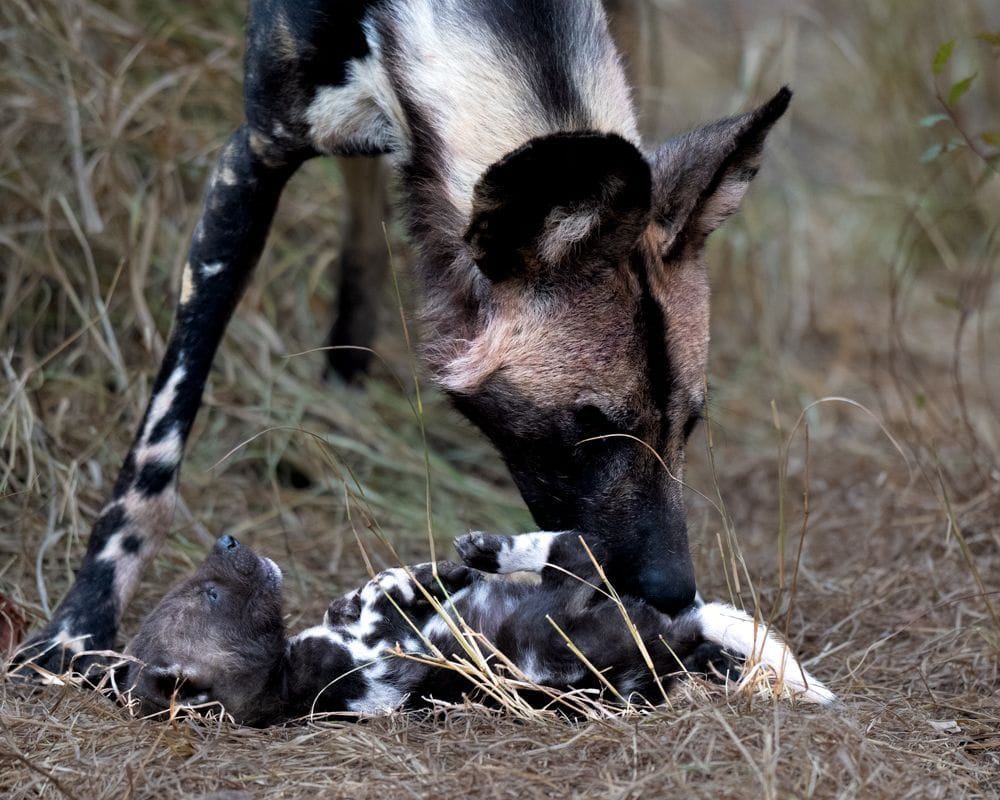
A rare season of pups, pressure and pack intelligence
There are predators that belong to place, and predators that seem to belong to motion. Lions hold ground with weight and confidence. Leopards make private use of drainage lines, riverine cover and shadow. Wild dogs are different. They arrive like weather. A pack can appear on a road in the early light, ears high and bodies loose, moving with that unmistakable forward lean that says the morning already has a purpose. Then they are gone, folded into grass, dust and distance.
This is what makes a wild dog den on Tengile Game Reserve so extraordinary. For a brief season, one of Africa’s most restless predators becomes locally anchored. The pack still hunts. It still runs. It still covers ground with the urgency and precision for which wild dogs are known. Yet every movement now bends back towards one place, because hidden inside a den are the lives that matter most.
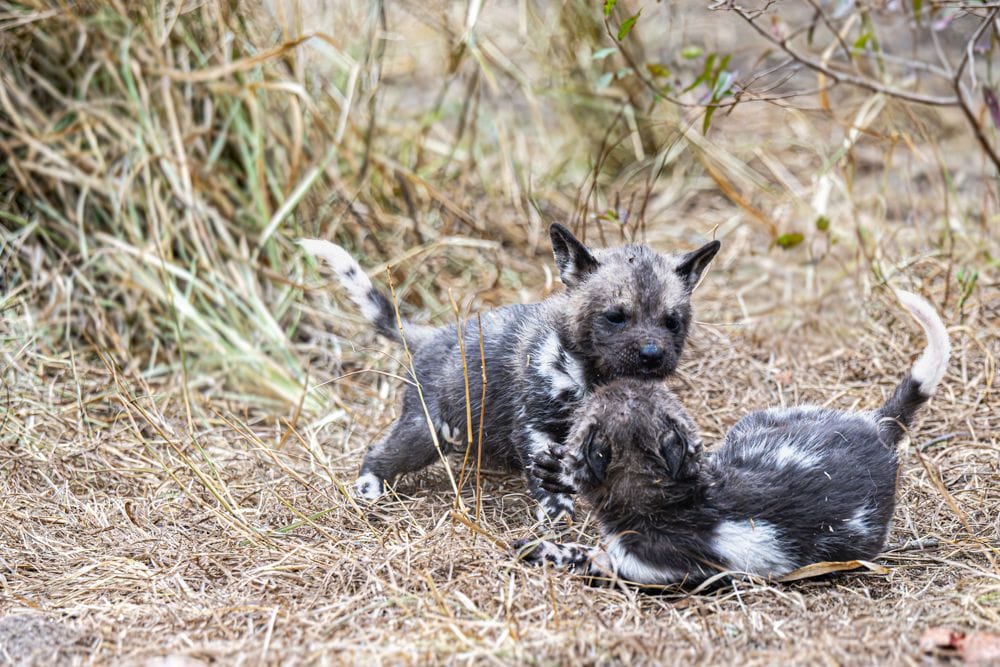
The current Tengile story is remarkable even before one reaches the den. According to guide feedback collated from the team, this is a pack of 13 adults, with at least 17 pups confirmed above ground at the time of the notes, and indications that there may have been more earlier in the season. The pups appear to fall into two clear age groups, perhaps even three, with the oldest estimated at around 11 weeks and the youngest at about nine and a half weeks. The first sign of birth was noted on 1 June 2026, and the first sighting of pups came on 12 July. For a species that is endangered, wide-ranging and often difficult to spend time with, these details already place the season in rare territory.
What gives this denning season its deeper fascination is the breeding complexity behind it. The guides believe that five females in the pack were pregnant, an unusually high number in itself. From post-birth milk production, the guides’ working interpretation is that only two of the five litters were successful, although they are clear that the exact events around the birthing period remain speculative. There is also the possibility that pups from other females were taken over and raised communally by the alpha female, behaviour some guides have observed before in other packs. This is where wild dog society becomes especially compelling. A den is never merely a hole in the ground with pups inside. It is a social pressure point, a place where hierarchy, instinct, cooperation and competition become visible.
That competition has been one of the defining observations at Tengile Game Reserve. The guides describe intense rivalry between pups of different ages, especially when adults return with food. These are not simply soft scenes of puppy play. They are early lessons in survival. Younger pups have to push into a feeding event where older pups already have size and confidence. Older pups test status and strength. At times, the fighting has been fierce enough for the guides to remark that they have rarely seen anything quite like it. In the long term, that competition may harden them. In the moment, it reveals how demanding wild dog life is from the beginning.
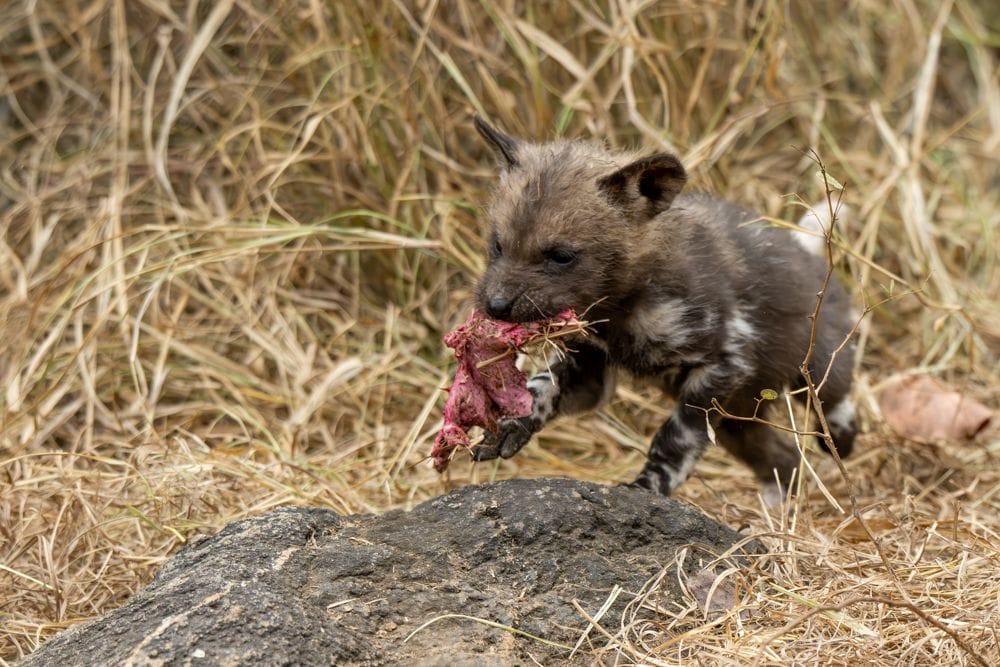
Feeding is the heart of the den’s daily theatre. For several weeks, adults have been returning to regurgitate meat for the pups, with one observation noting that pups no more than three weeks old were already receiving regurgitated food. By around seven weeks, some pups were already eating solids. The adults have been targeting mainly impala, which makes sense in an area where impala density gives the pack frequent opportunity, with grey duiker, nyala, warthog, scrub hare and other small to medium prey also mentioned in guide feedback.
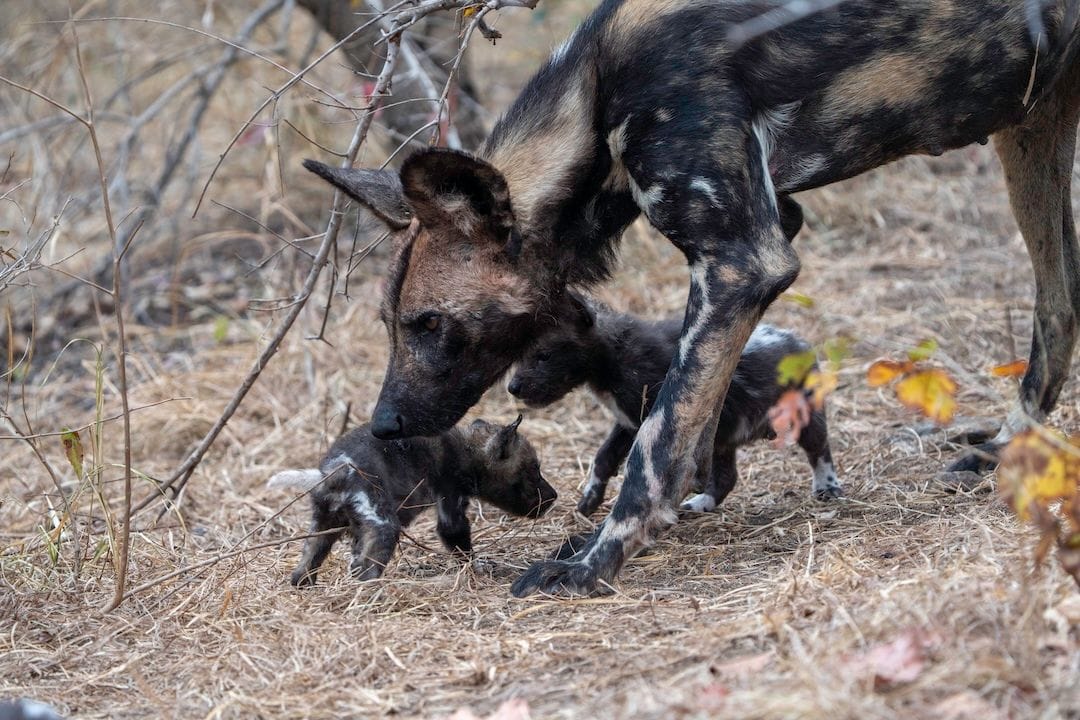
The pattern is beautifully organised. Usually, two adults remain behind as babysitters while the rest of the pack hunts. Those babysitters are not passive. They are guardians, sentries and anchors. When the hunters return, excitement gathers quickly. Pups rush forward. Adults are greeted with nudging, licking and begging around the mouth. Regurgitation follows, and the den becomes briefly chaotic with hunger, greeting and competition. Then, slowly, the pack settles again.
The den site itself helps explain why the pack has been able to hold this place. The current den is described by the guides as a large termite mound with at least four entrances, likely started by aardvark and possibly used by other denning animals before. It sits on the bank of a drainage line, with thick tamboti cover providing shade around the immediate area. Beyond that thicker centre, the surrounding country opens enough to make hunting practical. This combination matters: shelter for pups, shade for resting adults, multiple exits, nearby cover and access to suitable hunting ground. It is the kind of site that shows how carefully wild dogs choose when pups are at stake.
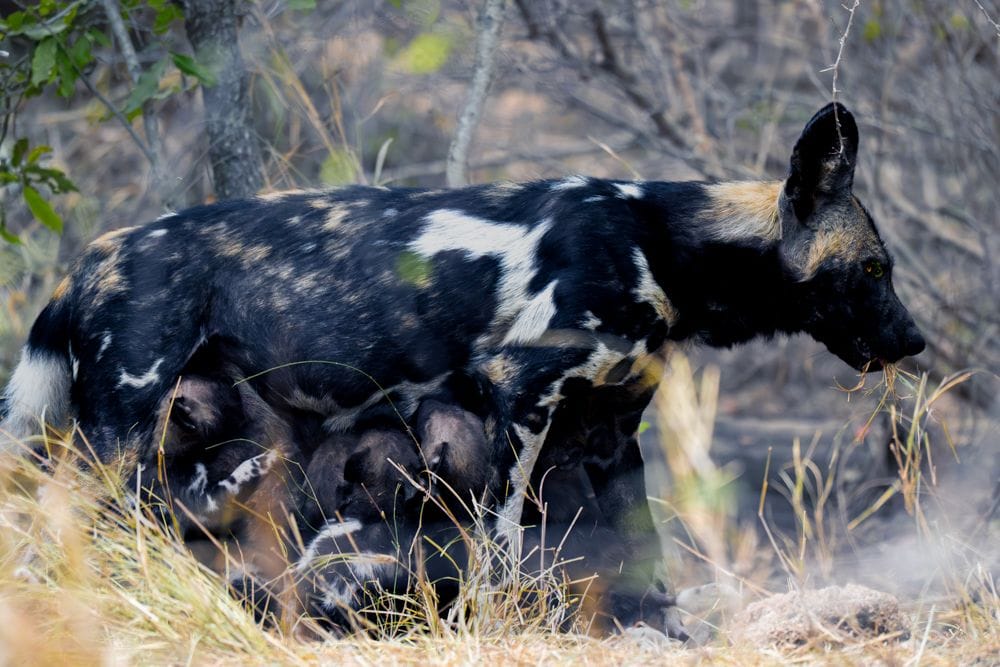
This is the fifth den site since birth, and that movement is part of the story. Wild dogs move dens for many reasons. Predator pressure, parasites and disturbance can all play a role, but at Tengile Game Reserve weather appears to have been important too. One earlier den, set in a more exposed mound with little shade, was used briefly before heavy rain and cold moved through. The guides later saw how much water had entered it. Around 80 millimetres of rain appears to have flooded the den and forced the pack to shift. For pups that small, cold and wet conditions are dangerous. The current den, with its tamboti shade and more protected setting, suggests how quickly a pack can adjust when weather, shelter and pup safety demand it.
Predator pressure has been present but, so far, manageable. Hyenas have been noticed in the broader context of the pack’s hunting, as they often trail wild dogs for opportunity, yet there has been little indication of hyenas pushing the den itself. One hyena was reportedly seen at distance and immediately chased away by the dogs. Lions have also passed through the broader block, including an incident where the Msuthu Pride chased a buffalo through the area near the den and killed it several hundred metres away. Once the lions finished feeding, they moved on. Since then, guide feedback suggests little lion pressure in the immediate den area. A female leopard was also treed as the dogs returned to the den, an encounter that says much about the confidence of a pack when it is moving as one.
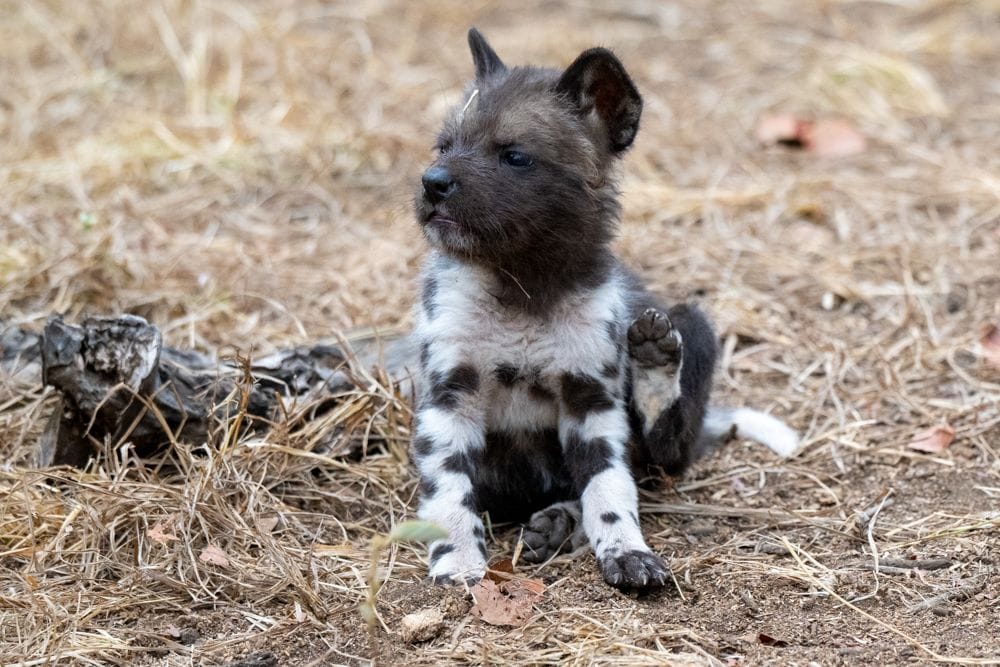
For Tengile Game Reserve, the significance of this season is enormous. Wild dogs are usually a fleeting privilege precisely because they move so widely. A den changes that rhythm. It creates a rare window of local consistency, with adults hunting on the property and returning to the pups, giving guests the chance to see behaviour that most safari-goers only glimpse in fragments. Yet the deeper value lies beyond the guest experience. As one guide noted, the den gives the team an opportunity to practise safe and sensitive viewing protocols during a highly vulnerable period, while observing and learning from one of Africa’s most endangered terrestrial predators.
That sensitivity is essential. A wild dog den is a nursery, not a stage. The privilege lies in witnessing without pressing. Vehicles, voices, distance and time all matter. The best sightings happen when the pack remains relaxed enough to continue its natural behaviour: pups emerging, adults resting around the perimeter, babysitters watching, hunters returning, food being shared, and the pack’s social structure briefly visible in the open.
What makes this Tengile Game Reserve den so powerful is that it shows fragility and success at once. The pups are vulnerable, competitive, still learning the rules of their species. The adults are under pressure to hunt enough, guard enough, avoid lions and hyenas, read weather, move dens when needed, and hold the pack together. Yet here they are, at least 17 pups confirmed, 13 adults still operating around them, a new pack in the area having chosen Tengile as safe enough for one of the most sensitive periods in its life.
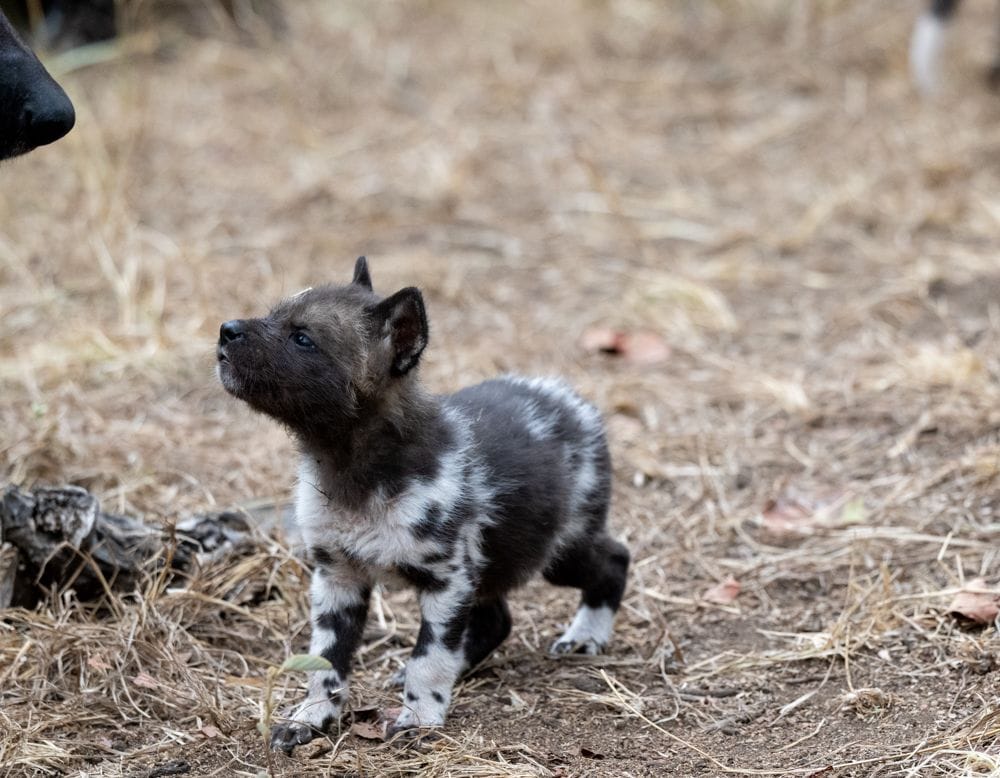
For guests, the images are irresistible. Small bodies at the den entrance. Oversized ears. Dusty faces. Adults stretched in the shade of tamboti trees. The sudden rush when the hunters return. But the real story is greater than cuteness. It is the sight of a pack making a future under pressure.
For Tengile Game Reserve, this is a wildlife moment worth telling with care and pride. It speaks to the quality of the landscape, the sensitivity of the guiding team, and the extraordinary complexity of a species too often reduced to speed. Wild dogs are usually the great runners of the bush. This season, on Tengile Game Reserve, they have given us something rarer: a chance to watch what happens when all that speed gathers around a den, and the whole pack turns itself toward survival.
Share
Up Next
February 24, 2026